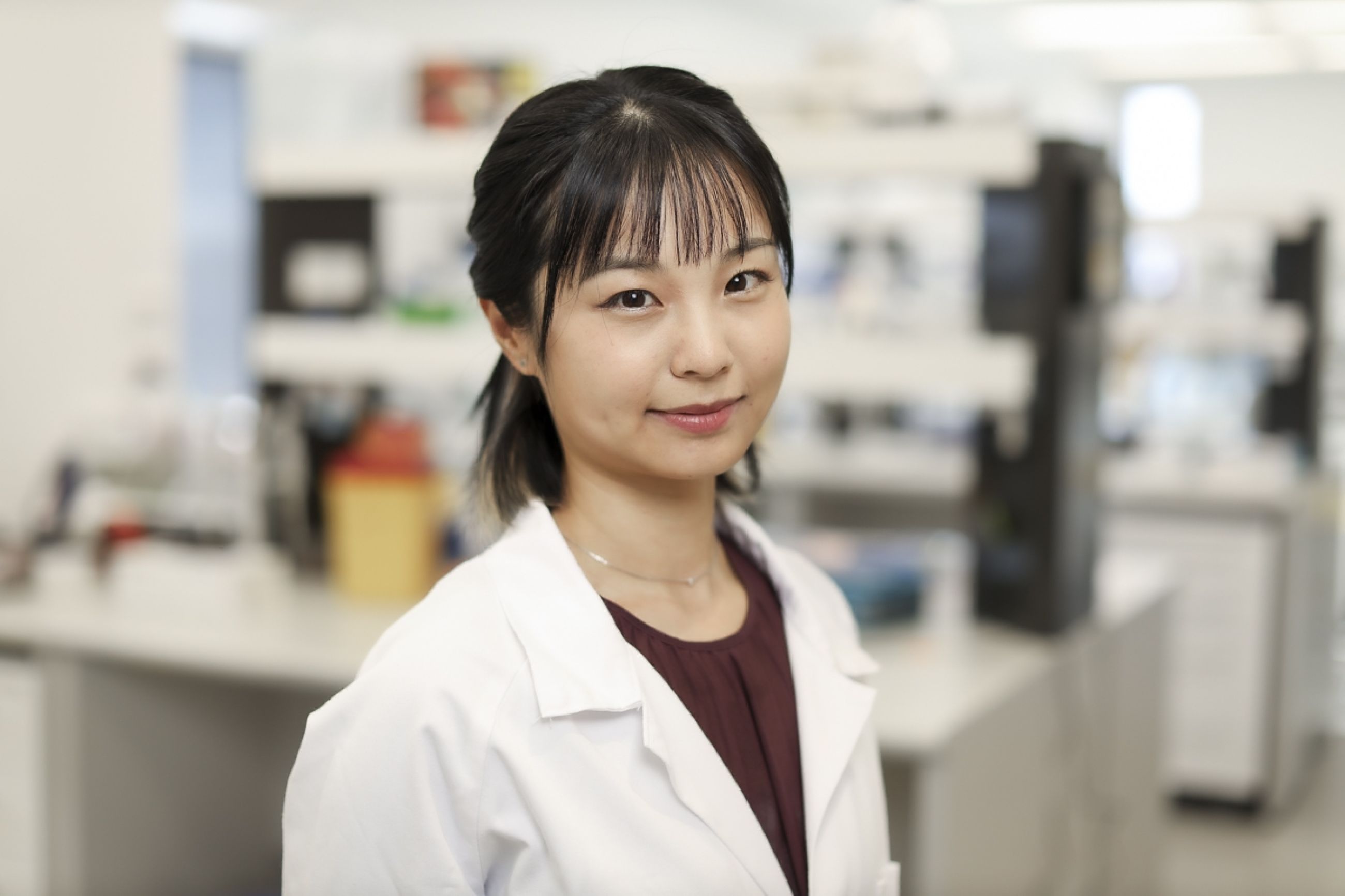
A new grant awarded to Children's Medical Research Institute scientist Dr Chen “Ashley’’ Yang will give hope to the families of children living with devastating telomere-related bone marrow disorders who currently have few treatment options.
Dr Yang has been awarded a three-year grant by Maddie Rieworldt’s Vision for her research project, “From Genetic Diagnosis to Gene Editing Therapy for Telomerase RNA–Related Bone Marrow Failure.’’ She is a member of CMRI’s Cell Biology Unit, led by Professor Tracy Bryan.
Telomere Biology Disorders are a group of inherited bone marrow failure syndromes. They occur when telomeres, the protective caps at the ends of chromosomes, become too short or do not function properly. This can lead to anaemia, frequent infections and serious bleeding problems. Bone marrow failure is a major cause of illness and death in people with Telomere Biology Disorders.
One of the major challenges for patients, families and clinicians is uncertainty following genetic testing. While testing can identify changes in telomere-related genes, it is not always clear whether these changes are harmful.
Dr Yang’s fellowship will focus on a key telomere-related gene called TERC. Using a highly efficient CRISPR-based gene-editing approach, Dr Yang will model patient-specific TERC mutations in stem cells. This could help improve the interpretation of genetic test results and support clearer clinical decision-making.
Current treatment for severe bone marrow failure is largely limited to bone marrow transplantation. However, it is not suitable for all patients, carries risks and depends on finding an appropriate donor. Dr Yang’s research will also explore the approach of gene therapy – correcting mutations in a patient’s own stem cells.
The long-term goal is to help lay the essential groundwork for future personalised gene therapies that could reduce reliance on donor transplantation.
Dr Yang has also worked with Maddie Rieworldt’s Vision to establish a consumer engagement network to work with families.
“I am deeply honoured and grateful to receive this fellowship, which provides an important opportunity to advance research that is both scientifically meaningful and closely connected to the needs of families affected by inherited bone marrow failure syndromes,’’ Dr Yang said.
“This support will allow me to build on our existing work in telomere biology and gene-editing approaches in disease-relevant blood stem cells, with the aim of improving our understanding of disease-causing gene variants and ultimately moving towards a safer, more precise therapeutic approach using a patient’s own stem cells.’’