Ten years ago, Children’s Medical Research Institute (CMRI) launched ProCan® – an ambitious cancer research program with a bold goal: to harness the power of proteomics to improve cancer diagnosis and treatment.
Genes provide important information about cancer, but proteins can tell researchers more about what cancer cells are actually doing. As ProCan co-founder Professor Roger Reddel explains: “Proteins are key to the behaviour of cancers and are also the targets of cancer treatments.”
The ultimate vision is to use that information to help clinicians make more informed treatment decisions for individual patients.
As Professor Reddel explains: “Where we see this going is that within a few years, when a patient is newly diagnosed with cancer, they will have their routine pathology done as usual. At the same time, a piece of the tissue will be sent for proteomic analysis, and the results will be returned to the cancer clinician at the same time as they get the pathology report. The proteomic report can also be accompanied by an AI-driven predictor of what the best treatment is for that patient at that time.”
Since opening in September 2016, ProCan – the Australian Cancer Research Foundation International Centre for the Proteome of Human Cancer – has analysed cancer samples at an extraordinary scale, building a vast resource of proteomic data alongside pathology images and clinical information. And much of that information was collected with the future in mind.
“We started collecting the pathology slides right from the beginning, on the assumption that one day the computation would become available to allow us to solve the problem of how to integrate pathology and proteomic data,” Prof Reddel said.
That day has arrived. Advances in artificial intelligence and computing power are now allowing ProCan researchers to bring these different types of information together in ways that were not possible when the program began.
The potential impact is significant, with research suggesting it could save Australia billions in healthcare costs.
The next chapter for ProCan
ProCan’s first decade demonstrated what researchers can learn from the cancer proteome at scale. Now, the focus is increasingly on translating that knowledge into information that could ultimately be used in cancer care.
The team has developed the technologies with clinical use in mind.
ProCan’s Heat ‘n Beat method enables rapid proteomic processing of very small quantities of routinely collected tissue – an important step towards making proteomics practical within existing diagnostic workflows.
Its TargetQuant technology is being tested through work with Omico to quantify therapeutically relevant protein targets and translate those measurements into clinically interpretable information.
Potential biomarkers are also moving further along the pathway towards the clinic. A proteomic predictor of treatment outcome for children with the most common form of childhood leukaemia is in an advanced stage of development; a stage III colon cancer risk score has undergone independent validation and is moving towards clinical evaluation; a pancreatic cancer proteomic panel is being developed as a potential diagnostic tool; and a mesothelioma immunotherapy risk score is progressing towards targeted assay development and clinical implementation.
Getting to this point has taken a decade of technology development, data, samples, collaboration and discovery. Here are 10 facts that show just how far ProCan has come – and the foundations that have been built for its next chapter.
1. It began with a $10 million grant
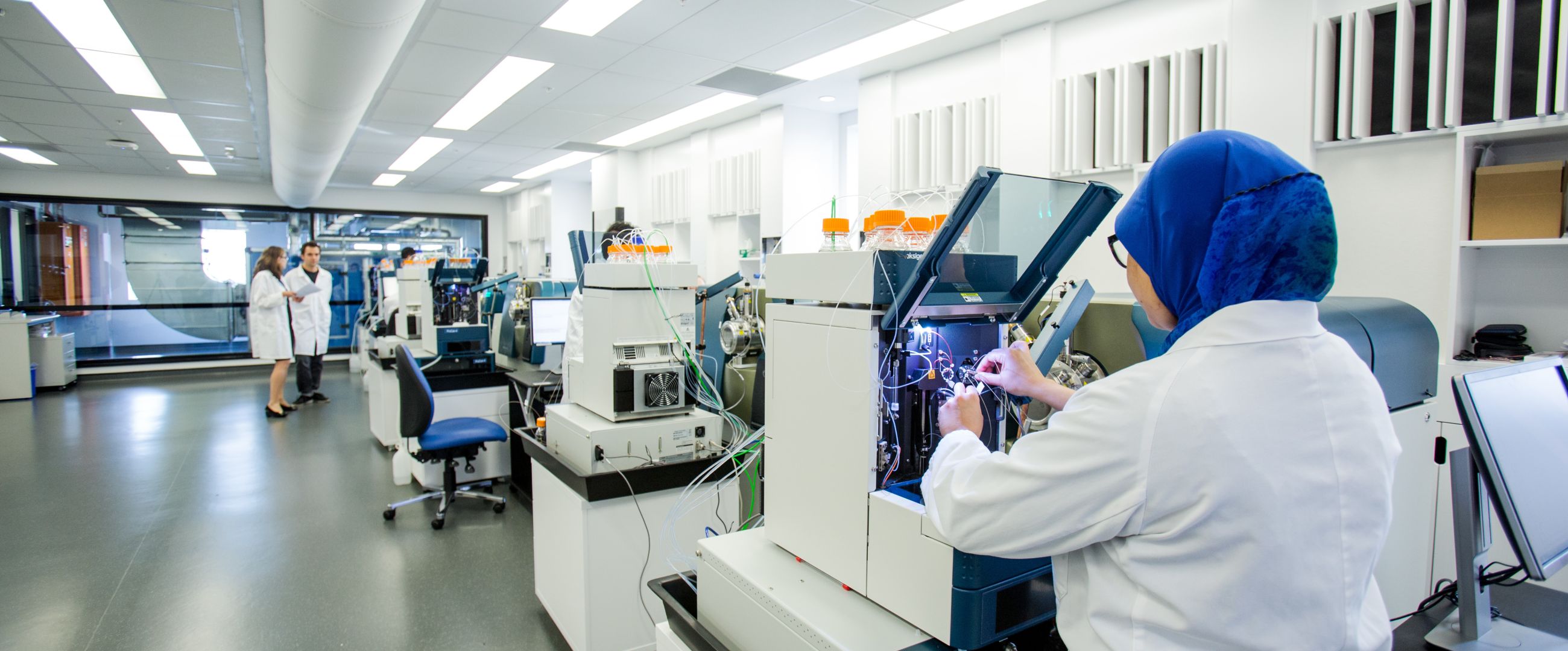
In 2015, the Australian Cancer Research Foundation (ACRF) awarded $10 million to establish ProCan at CMRI – one of Australia’s largest private grants for medical research equipment at the time. The funding helped establish a purpose-built facility featuring six cutting-edge mass spectrometers, designed to analyse proteins in cancer samples at unprecedented scale and speed. ProCan officially opened in September 2016.
2. ProCan joined the US Cancer Moonshot before it had even officially opened
In July 2016, just months before its official opening, ProCan became linked to the US Government’s Cancer Moonshot Proteogenomic initiative. CMRI’s history records ProCan as being the initiative’s first international member, connecting the Australian research program with a global effort to accelerate progress against cancer.
3. ProCan has analysed samples from around 13,000 people with cancer
Over the past decade, ProCan has analysed samples from around 13,000 people with cancer, spanning both childhood and adult cancers. Some samples have been analysed multiple times, creating a vast proteomic resource that researchers can use to investigate how cancers differ and how those differences may relate to diagnosis, treatment and outcomes.
4. Six mass spectrometers worked around the clock
For the first eight years, the heart of ProCan was the six mass spectrometers funded through the original ACRF grant. Now mostly replaced by more modern instruments, these instruments were operated 24 hours a day, seven days a week, apart from servicing and maintenance. That extraordinary utilisation reflects the scale of the task ProCan set out to tackle: analysing the cancer proteome across thousands of samples.
5. ProCan can measure thousands of proteins in a cancer sample
Using mass spectrometry, ProCan can measure many thousands of proteins in a cancer sample, creating a detailed molecular profile of what is happening inside the cancer. This allows researchers to investigate differences between cancers at the protein level and explore how those differences may relate to cancer behaviour and treatment response.
6. Its research spans more than 100 cancer types
By 2025, ACRF reported that ProCan’s database contained more than 23,000 cancer proteomes covering more than 100 cancer types. Importantly for CMRI, that includes both adult and childhood cancers. Studying such a broad range of cancers at scale gives researchers opportunities to identify patterns that may not be apparent when cancers are examined individually.
7. More than 140 collaborations are putting ProCan’s capabilities to work
ProCan was designed to be collaborative. Over its first decade, it has worked with more than 140 research collaborators worldwide, using proteomics to answer questions across many different cancers. Those collaborations span discovery, validation and translation, bringing together cancer researchers, clinicians and other specialists to explore how information contained within the cancer proteome could ultimately contribute to better cancer care.
8. One landmark project analysed 949 cancer cell lines
In collaboration with the Wellcome Sanger Institute in the UK, ProCan analysed 949 human cancer cell lines, creating a large-scale proteomic dataset that could be compared with responses to up to 650 different drugs. The project required around 10,000 hours of mass spectrometry instrument time. By bringing protein and drug-response data together at this scale, researchers created a valuable resource for investigating relationships between the proteins found in cancer cells and their response to different treatments.
9. Its potential economic impact could be measured in billions
ProCan’s potential impact extends beyond improving cancer treatment. An economic analysis by PwC, reported by NSW Health, estimated that ProCan could avoid as much as $1.76 billion in Australian healthcare costs over 10 years. The modelling looked at just three cancer types and one clinical scenario for each, highlighting the potential broader economic impact of more precise cancer diagnosis and treatment.
10. AI is helping unlock a decade of data
From the beginning, ProCan collected not only cancer samples and protein measurements, but also pathology images and clinical information. Now, ProCan is developing a multimodal foundation model that brings mass spectrometry data, pathology images and clinical information together, with access to ResetData’s AI-F1 Supercomputer accelerating the work.
Prof Reddel says this additional computing power is allowing the team to recover important spatial information – including where particular proteins are located within a tumour – and investigate what these combined data could reveal about a patient’s cancer.
“We’re going at least six times faster than we would have otherwise. And we’re really accelerating this whole project by a couple of years,” he said.
The team is investigating whether this information can help predict how a patient may respond to treatment, how aggressive their cancer may be and how likely it is to return.
Ten years ago, achieving ProCan’s vision required building something that did not yet exist at this scale – bringing together the multidisciplinary team, technology, samples, data and collaborations needed to study the cancer proteome.
A decade later, that extraordinary resource is opening new possibilities for how proteomics could contribute to cancer care – and bringing a vision conceived 10 years ago closer to reality.