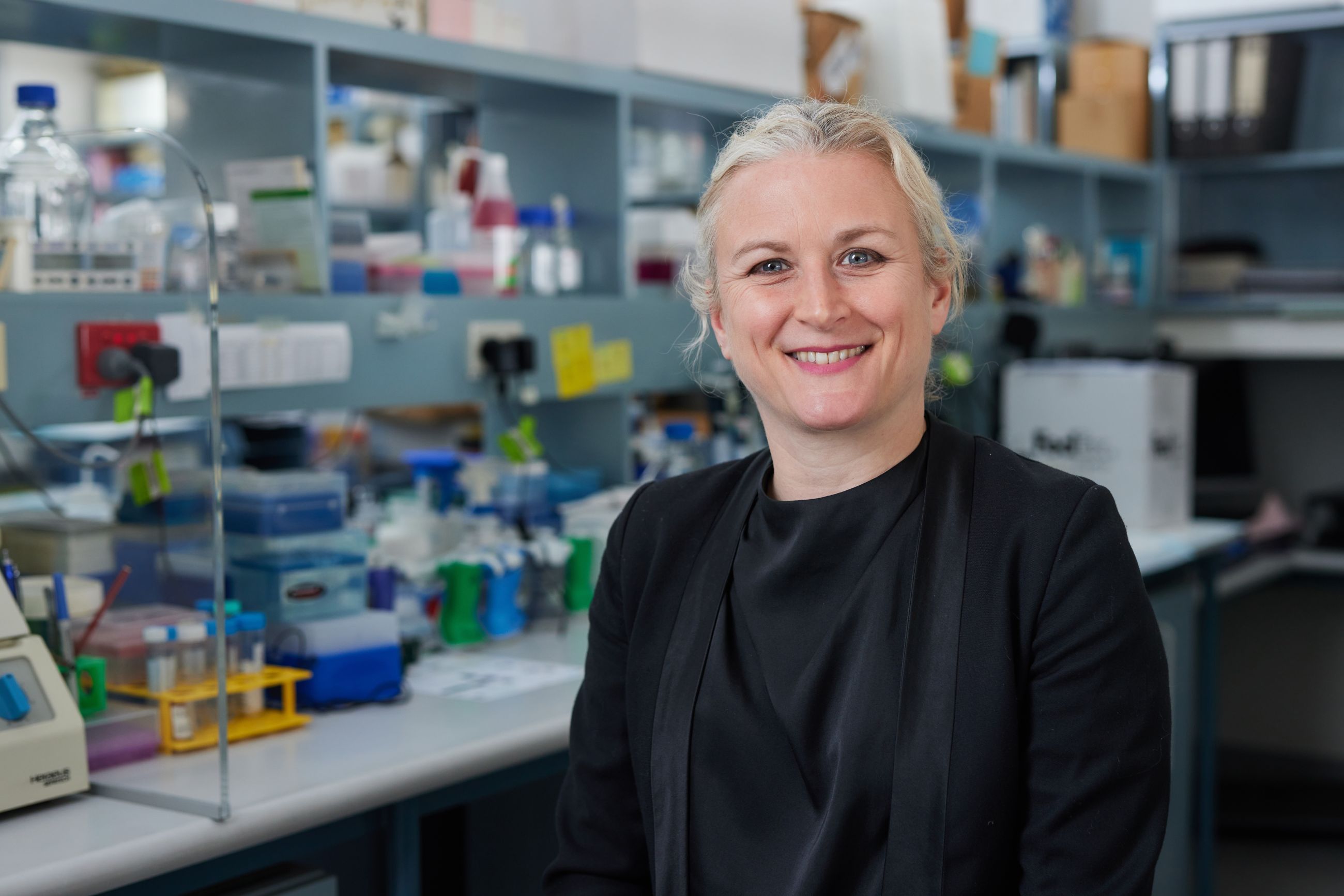
A team of some of Australia’s top scientists, led by Children’s Medical Research Institute’s Professor Hilda Pickett, has been awarded a $5 million National Health and Medical Research Council 2025 Synergy Grant for their work to develop first-in-world treatments of some of the most aggressive and difficult-to-treat cancers.
The project focuses on identifying precision therapies for ALT-dependent cancers.
ALT (Alternative Lengthening of Telomeres) is a pathway used by 10-15 per cent of cancers that allows the cancer cells to proliferate relentlessly by bypassing the cells’ ability to die naturally.
ALT, an Australian discovery made in 1995 by scientists at Children’s Medical Research Institute, launched an entirely new field of cancer research where the Institute remains a global leader.
ALT cancers represent dangerous treatment-resistant malignancies. Professor Pickett said: “The lack of targeted ALT therapies is internationally recognised as an urgent and key unmet need in modern oncology".
It is estimated that 1 to 1.3 million people worldwide, including 5000-7000 Australians, die from ALT cancer every year. ALT is particularly prevalent in bone and soft tissue sarcomas, in many aggressive brain tumours and a subset of pancreatic cancers.
The NHMRC Synergy Grant awards a multidisciplinary research team that also includes Professor Tony Cesare from Children’s Medical Research Institute, and Associate Professor Andrew Deans and Dr Sarah Henrikus from St Vincent’s Institute, Dr Lisanne Spenkelink and Dr Jacob Lewis from University of Wollongong, and Associate Professor Yu Heng Lau from University of Sydney, who bring together unique and complementary expertise.
“We are bringing together Australia’s experts in ALT, telomeres, DNA metabolism, DNA repair, and cancer therapeutics, to systematically addresses a significant knowledge gap,’’ Professor Pickett said. “Our ultimate goal is to deliver the first precision therapies for difficult-to-treat ALT cancers, thereby transforming outcomes for many thousands of Australians and millions of people worldwide diagnosed with ALT-dependent tumours each year."
Professor Pickett said the NHMRC grant will provide crucial funding for a team that is highly motivated to address this urgent need.
"Our mechanism-driven approach will identify clinically-targetable vulnerabilities in the ALT machinery, ultimately resulting in a paradigm shift in the management of ALT cancers and transforming outcomes for the most challenging and recalcitrant tumours where patients currently have little hope."
Read about how this work can impact Audrey's cancer: https://www.theage.com.au/nati...