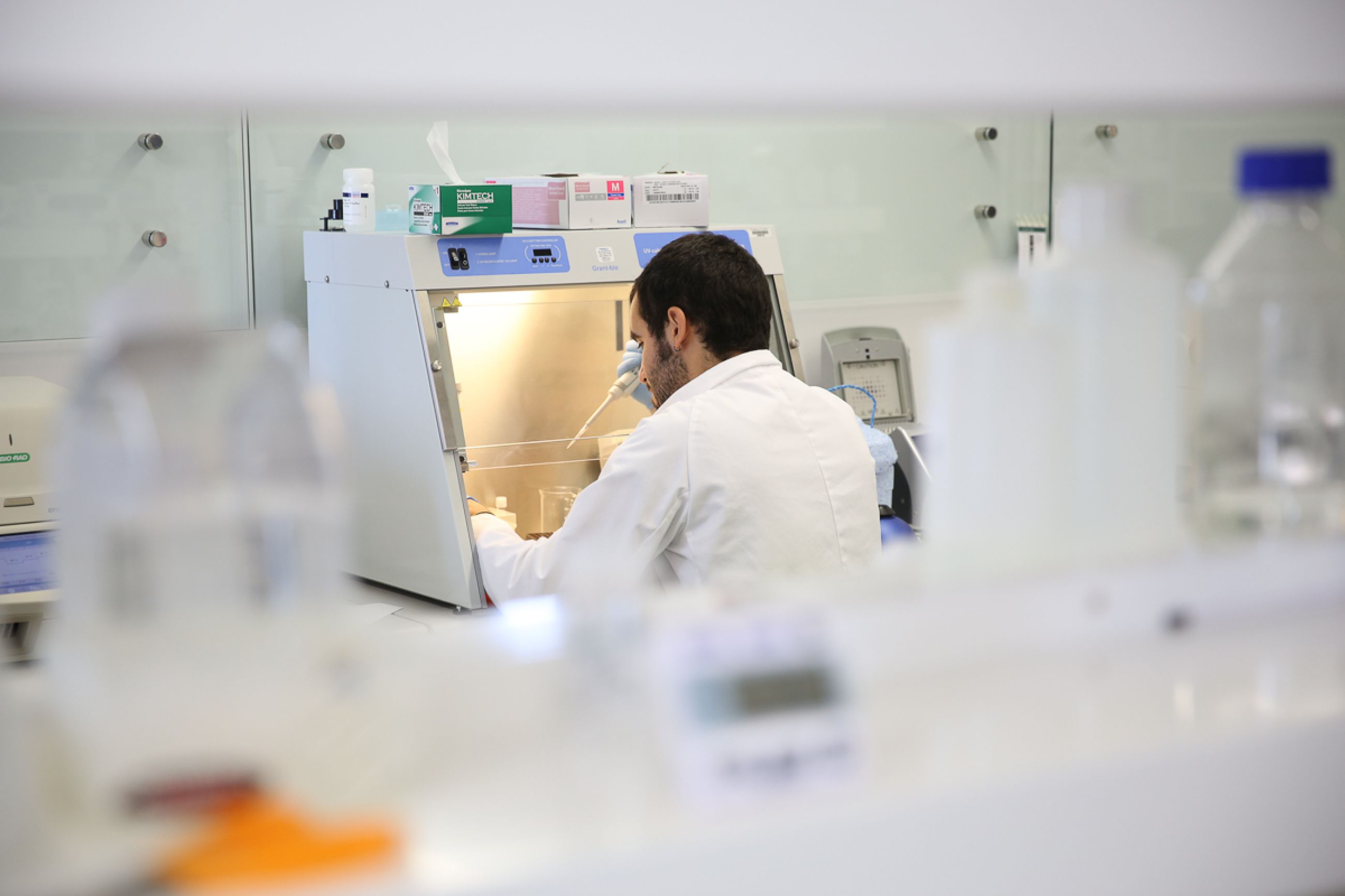
A team of scientists from Children’s Medical Research Institute (CMRI) has found a way to assess the function of gene therapy tools designed specifically to target human liver, in preclinical models, which will facilitate preclinical studies and improve clinical outcomes.
The publication, which has been released online, is in Molecular Therapy Methods & Clinical Development. It features the work of scientists from CMRI’s Translational Vectorology team who worked together with a team from the Commonwealth Scientific and Industrial Research Organisation (CSIRO).
Translational Vectorology Unit Head, Associate Professor Leszek Lisowski, the senior author, together with the lead author, Dr Marti Cabanes-Creus, develops viral vectors, which are used to deliver gene therapy therapeutic cargo to target cells in order to treat genetic disorders. He said there is a lot of international interest in using gene therapy in the human liver, but translational research in this area can be difficult, as the sophisticated viral vectors we develop to specifically target human tissues and cells are difficult to functionally study in simplified preclinical models.
“This has historically limited the value of preclinical studies for predicting the efficiency in liver-targeted gene therapy clinical studies, hampering preclinical developments,’’ A/Prof Lisowski said.
In this study, they looked at why the viral vectors behaved differently in human liver and liver models used in preclinical studies to assess safety and efficacy before entering human trials.
The CMRI team has managed to identify specific functional domains on the surface of the viral vector that, when modified, allow the clinical candidates to become more efficient at targeting the preclinical models. This enables the researchers to perform the large number of safety and functional studies required in support of clinical programs using easily accessible preclinical models in the laboratory.
The other CMRI scientists involved in the publication were Inna Navarro, Sophia Liao, Grober Baltazar, Matthieu Drouyer, Erhua Zhu, Clement Luong, and the Head of CMRI’s Gene Therapy Research Unit, Professor Ian Alexander.
Read the full publication here: https://www.sciencedirect.com/science/article/pii/S2329050121000760