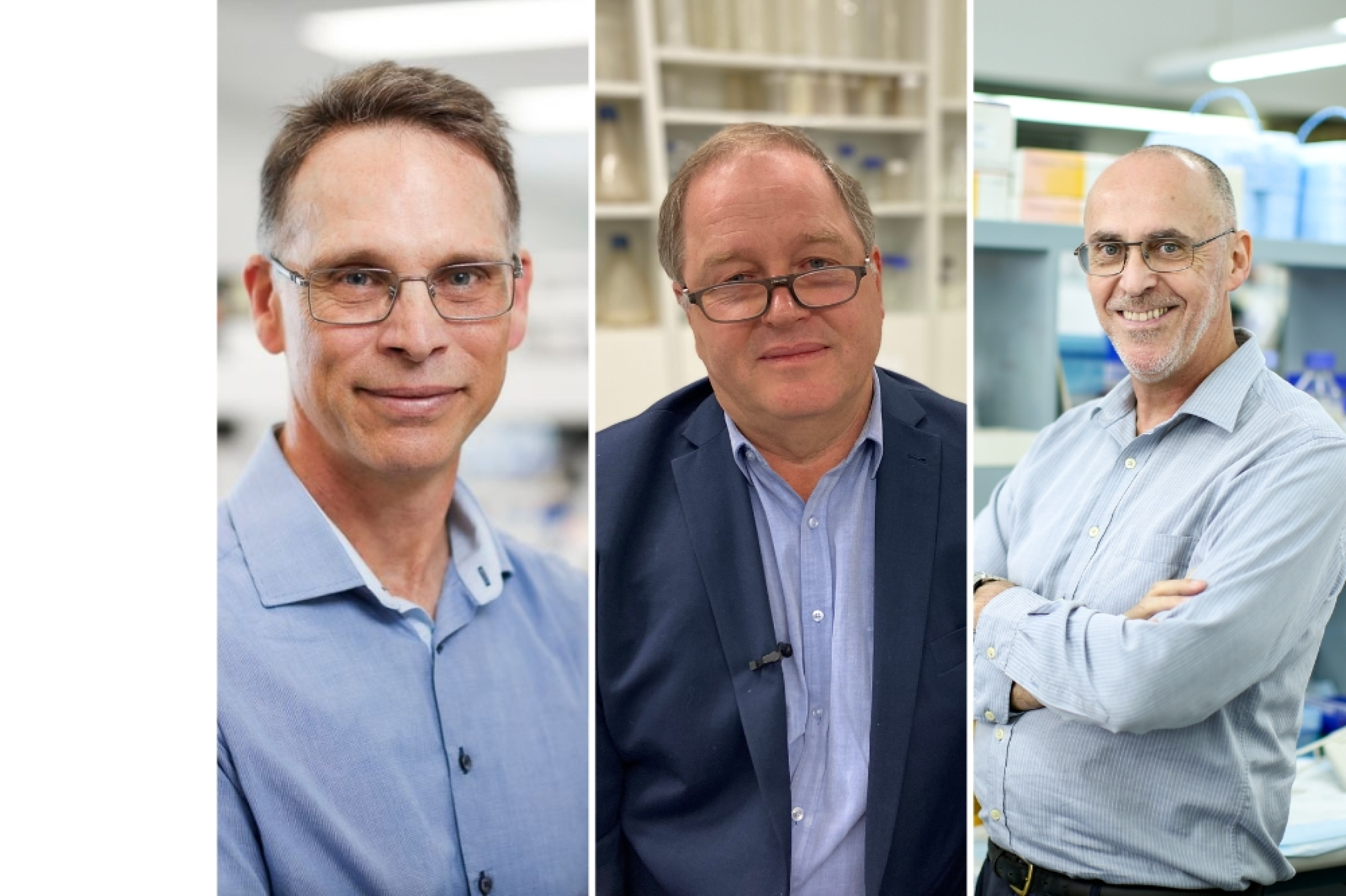
Children’s Medical Research Institute congratulates three of our scientists who have been awarded highly competitive National Health and Medical Research Council (NHMRC) Ideas grants – for work on improving patient access to life-changing gene therapies, and for the development of new chronic pain treatments.
Associate Professor Grant Logan and Head of CMRI’s Gene Therapy Research Unit, Professor Ian Alexander, were awarded a grant for their novel idea of finding ways to evade natural immunity that prevents some infants and children from accessing gene therapies for genetic conditions including Spinal Muscular Atrophy (SMA), Sanfilippo syndrome and Duchenne muscular dystrophy.
Professor Phil Robinson, who leads CMRI’s Cell Signalling Research Unit, won an Ideas Grant with his collaborator, Professor Adam McCluskey from the University of Newcastle for their proposed work on developing a novel and long-duration approach to pain therapy.
Gene therapy is a revolutionary approach to treating genetic and acquired diseases that most commonly involves replacing or repairing a faulty gene. The most efficient systems for delivery directly into patients are those based on a harmless virus named adeno-associated virus (AAV). Gene therapy for spinal muscular atrophy (SMA) is one example and it has been a game changer with more than 40 newborns now successfully treated in the Sydney Children’s Hospital Network, each via a single infusion.
The problem is that some infants who could benefit from AAV gene therapy are unable to receive it because their body has developed natural immunity to the therapy’s AAV delivery system. This problem increases with increasing age of the patients and A/Prof Logan and Professor Alexander are now working on a new generation of therapies to circumvent this issue.
“We still have a way to go, but it is very satisfying to reach this point in the journey and it would be incredible to see more infants and children having access to these life-changing technologies.’’
Associate Professor Anai Gonzalez Cordero, Head of CMRI’s Stem Cell Medicine Group, has also received funding as part of a winning grant application with Associate Professor Rick Liu from the University of Melbourne, for work on gene therapy using novel RNA gene editing approaches to treat inherited retinal diseases.
Prof Robinson’s project aims to help some of the 3.2 million Australians living with chronic pain. He is targeting a key protein factor involved in both neuropathic (nerve) pain and epilepsy.
“Neuropathic pain has seen no major therapeutic advance in over 30 years,’’ Prof Robinson said. “It is due to damage to the somatosensory nervous system caused by various kinds of injury or disease. Since nerves do not heal well, the pain is highly resistant to therapies and is a major unmet medical need.’’
The project’s idea is a new approach that blocks signalling from pain receptors, rather than targeting the receptors themselves. Prof Robinson and colleagues have found that by disrupting any of three proteins in a key cellular pathway, neuropathic pain is reduced in mouse models. They want to build upon some current, clinically-approved drug therapies, by reengineering and repurposing them in new ways to produce a therapy that could last for a week if it is found safe to use in people.
CMRI’s Director, Professor Roger Reddel congratulated CMRI researchers on their success.
“These scientists are leaders in their field with great vision for addressing serious health issues impacting patients in Australia and overseas,’’ he said. “Winning these prestigious Australian Government grants, in such a competitive environment, reveals the excellence and depth of their extraordinary work.’’