It may have been the first time that the ProCan Collaborator Update was held online rather than at the Institute, but there was obvious anticipatory excitement among the meeting participants who attended to hear about and discuss the progress that has been made in the last year and the significant stage that this research program has reached.
Children’s Medical Research Institute holds the ProCan Collaborator Update every year to ensure that everyone who is involved in the project is aware of the latest progress. This third annual update event was attended by representatives of the pharmaceutical industry, government, ProCan's consumer advisory group, and philanthropic funders such as the Australian Cancer Research Foundation (ACRF), as well as current and potential research collaborators.
With major support from ACRF, ProCan was co-founded by CMRI’s Director Professor Roger Reddel and Professor Phil Robinson with the objective of analysing tens of thousands of cancer samples. The aim is to help cancer clinicians pinpoint the best treatment available for an individual patient, based on the information that is being generated and collected in the ProCan database.

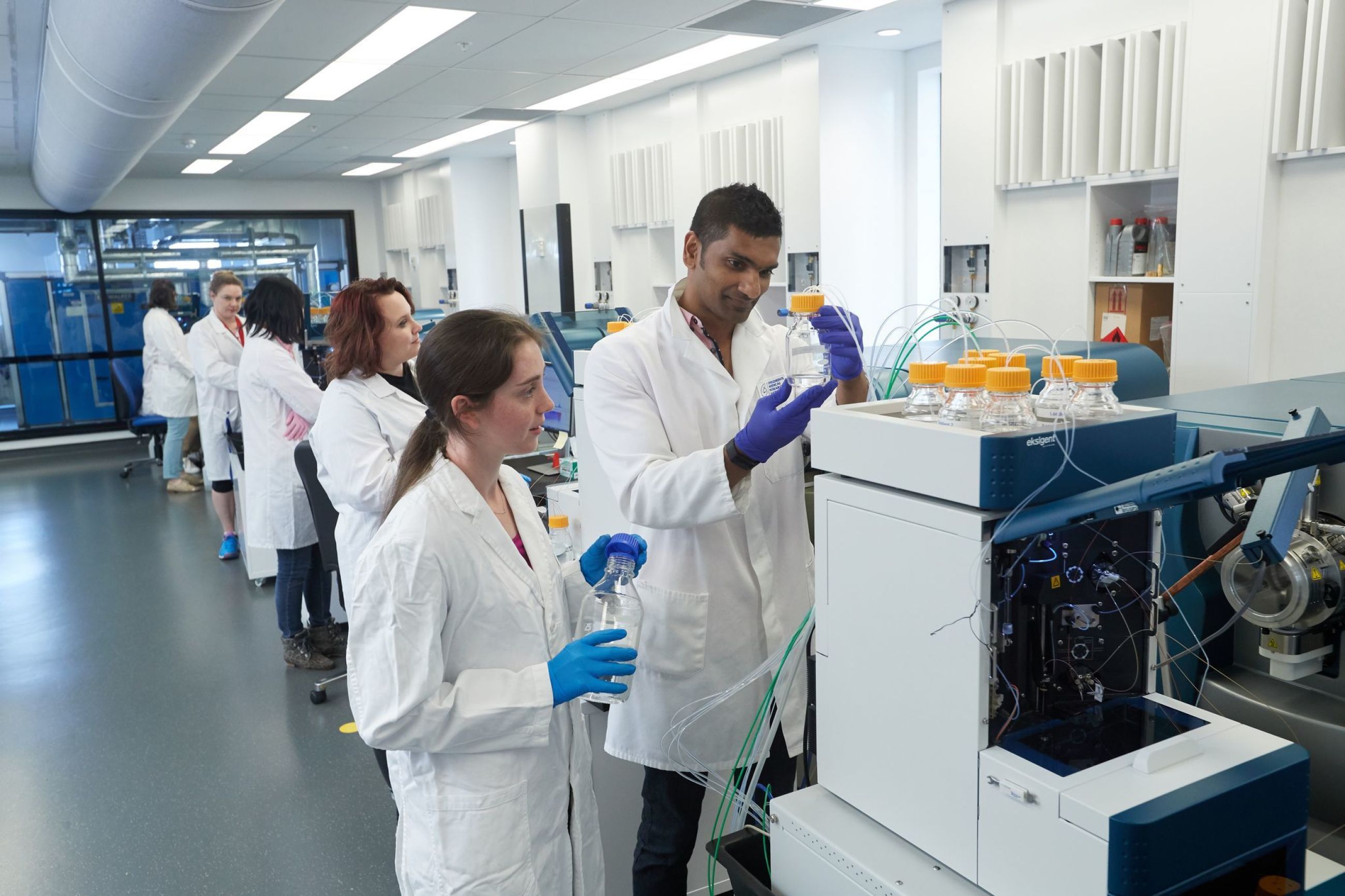
One of the challenges when the project started four years ago was to develop processes that would make it possible to analyse a cancer's proteome within a 36-48 hour period, so that the data can be made available as soon as the treating clinician needs it. Professor Reddel said that the ProCan team of proteomicists, software engineers and data scientists has exceeded all expectations by devising methods to generate the protein list within nine hours of receiving a cancer sample.
The ProCan Laboratory Team Leader, Dr Peter Hains, told the audience that the initial three years spent on method development and improvements had really paid off. “We’re at the stage where we are looking at 1000 proteomes a month. That’s about 10,000 a year. Ninety-nine per cent of the time we can guarantee that we’ll get useable data. It is fantastically rapid, and we expect our next publication to make a big splash.’’
ProCan's strategy is to analyse thousands of types of protein molecules in each individual cancer – the proteins collectively are called the proteome. Professor Roger Reddel said at the ProCan Collaborator Update that, up until now, analysing 100 cancer proteomes was considered a large study, whereas ProCan needs to analyse tens of thousands of proteomes in order to achieve its clinical objectives. He said that ProCan's recent publication in the scientific journal, Nature Communications, had shown for the first time that analysing proteomes on this scale is possible.
“We also took a gamble at the start of the research program that the particular approach we were taking to analysing proteomes would be suitable for predicting treatment outcomes, and we are delighted that a large study we are close to completing has shown that it is highly suitable,’’ Professor Reddel said.
In his presentation, Dr Qing Zhong, ProCan Cancer Data Science Group Leader, explained the data in the recent Nature Communications publication, and the steps ProCan has taken to obtain reproducible data on a large scale. He also provided a preview of ProCan's collaborative study with the Wellcome Sanger Institute of many hundreds of cancer cell lines that have been treated with hundreds of different cancer drugs, and showed how analysing proteomic data using machine learning is able to predict which drugs the individual cancers will respond to.
In his summary, ProCan Co-founder Professor Robinson said ProCan was now at a “turning point’’.

“We’ve collected reliable data across multiple types of cancer and now we just have to put the whole thing together. We are going to be answering many more really interesting questions from this point forward,’’ Professor Robinson said.
“When Roger and I first conceived this project, this is what we envisaged. What we’ve demonstrated is that what we conceived can be done, and now in the next three years, the challenge is getting it into the clinic and having outcomes from a clinical perspective.’’
In closing the 2020 ProCan Collaborator Update, Professor Reddel listed the cancer types that are currently being analysed, which includes both childhood and adult cancers, of the brain, lung, liver, breast, bone and soft tissues. The ProCan team has created a high-throughput laboratory paired with expert cancer data scientists and software engineers who work with oncologists and collaborating research partners to answer high-value clinical questions. Discovery and validation of protein signatures that predict drug response in cancer patients, in conjunction with other relevant test results, is the objective ProCan is working towards.
“We have the capacity to analyse many more cancer cohorts, and we look forward to establishing many more collaborations where we can add proteomic analyses to existing cancer datasets”.