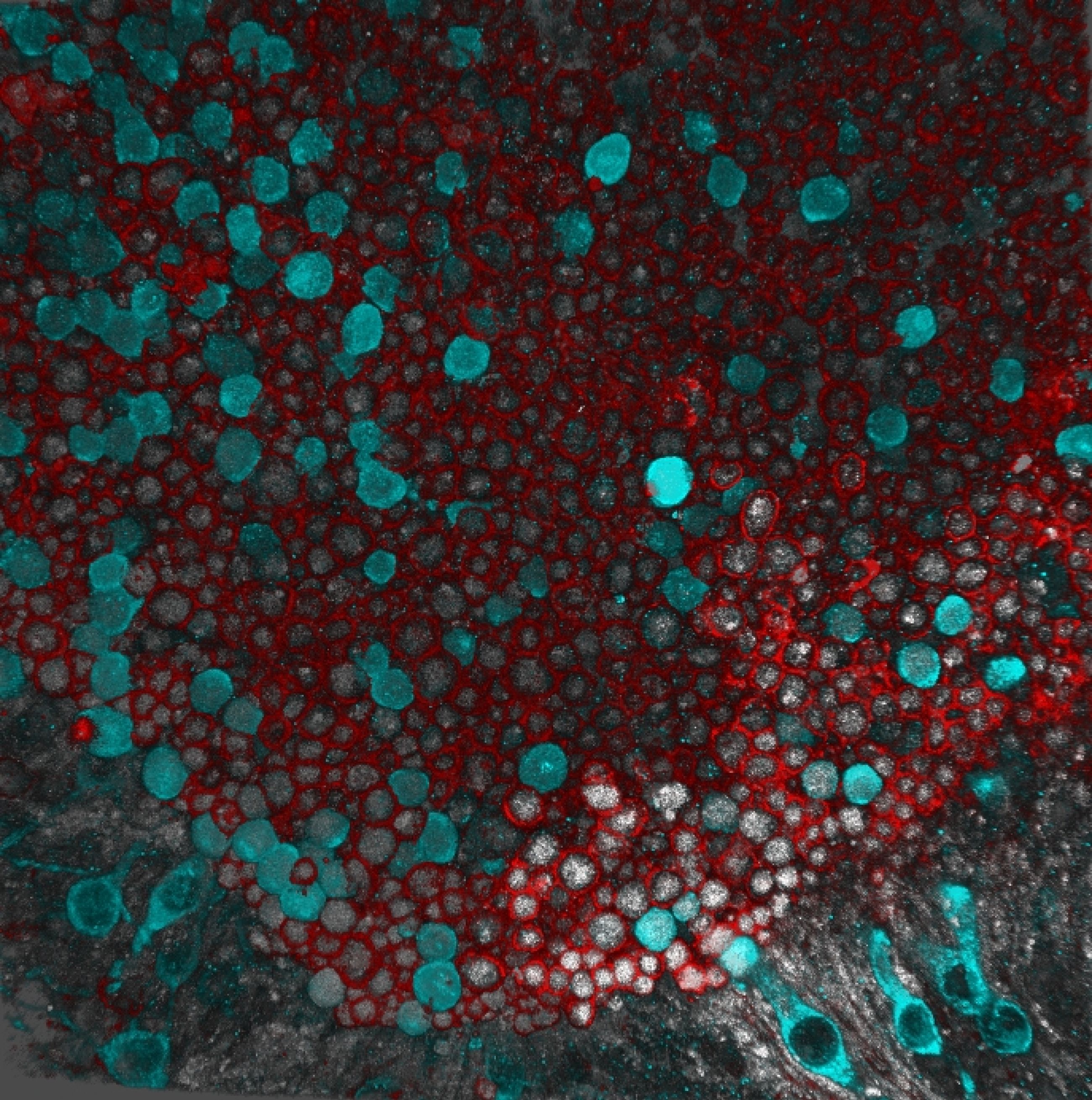
Researchers at the Children’s Medical Research Institute (CMRI) have uncovered new insights into how the human retina forms in early development, using cutting‑edge stem cell–derived retinal organoids.
In a new study published on Nature Communications today CMRI’s Stem Cell Medicine Unit in collaboration with the Computational Biology Unit demonstrates the central role of retinoic acid, a biologically active derivative of vitamin A, in shaping the developing human retina.
Using retinal organoids, three‑dimensional structures grown from human stem cells that closely mimic the developing retina, the team systematically modulated retinoic acid signalling. This allowed them to track how the forming retina responds to changes in this critical pathway, revealing how tightly retinoic acid levels must be controlled during development.
“This work helps explain how precise signalling environments guide the formation of a complex sensory tissue like the retina,’’ Associate Professor Gonzalez Cordero said.
The study combines experimental stem cell models with omics and advanced computational analysis, enabling the researchers to map how individual retinal cell populations respond to retinoic acid over time.
Understanding the molecular signals that govern early human retinal development is essential for improving stem‑cell–based models of the eye, and may inform future efforts to model retinal disease, screen therapies, or optimise regenerative approaches.
The research highlights the importance of interdisciplinary collaboration and showcases how human organoid systems can provide insights into developmental processes that cannot be directly studied in humans.