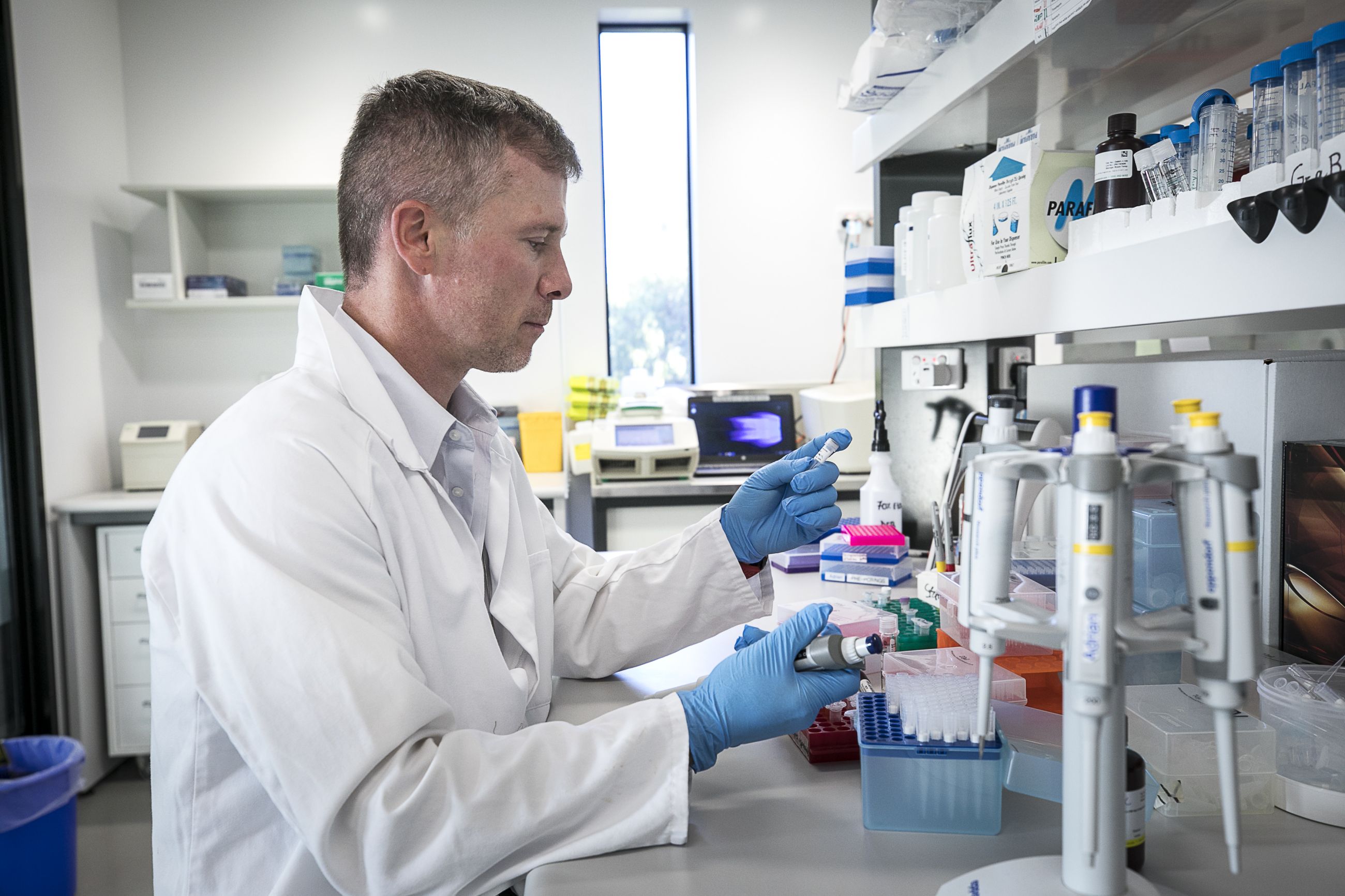
Researchers at Children’s Medical Research Institute (CMRI) are developing a new way to treat Alzheimer’s disease using gene therapy. This work is being led by CMRI’s Translational Vectorology team and is made possible through funding from the US-based Cure Alzheimer’s Fund.
Alzheimer’s disease is the most common cause of dementia, and there is an urgent need for new and more effective treatments. Professor Leszek Lisowski, who heads the Translational Vectorology Unit at CMRI, and his team are taking a fresh approach that could help overcome one of the biggest obstacles in treating brain diseases.
A major challenge in treating conditions that affect the brain is getting medicines into the brain in the first place. The brain is protected by a special barrier, called the blood–brain barrier, which keeps harmful substances out. However, this protective system also makes it very difficult for treatments to reach the brain cells where they are needed. Many promising therapies fail simply because they cannot get past this barrier.
Professor Lisowski’s team is working to solve this problem. “We are developing a new generation of gene delivery tools tiny, harmless viruses known as AAVs (adeno-associated viruses) that are specially engineered to cross the human blood–brain barrier,” he explained.
Their strategy is to design these AAVs so they can attach to specific receptors on blood vessels in the human brain. This would allow them to pass safely through the barrier and deliver gene therapies directly to brain cells. If successful, this would be the first delivery system of its kind optimised for humans.
“By solving one of the biggest challenges in brain treatment, we hope to speed up the development of new therapies that could one day repair damage in the brain and improve memory and thinking,” Professor Lisowski said.
He also expressed gratitude for the support from Cure Alzheimer’s Fund. “Without their funding, this research would not be possible. We are hopeful that this work will eventually lead to a much-needed treatment for this devastating disease.”
This new AAV technology could also help treat many other brain disorders, including those affecting children. Being able to deliver gene therapies across the blood–brain barrier would open the door to new treatments for several neurological diseases, such as childhood dementias, for which no effective therapies currently exist.