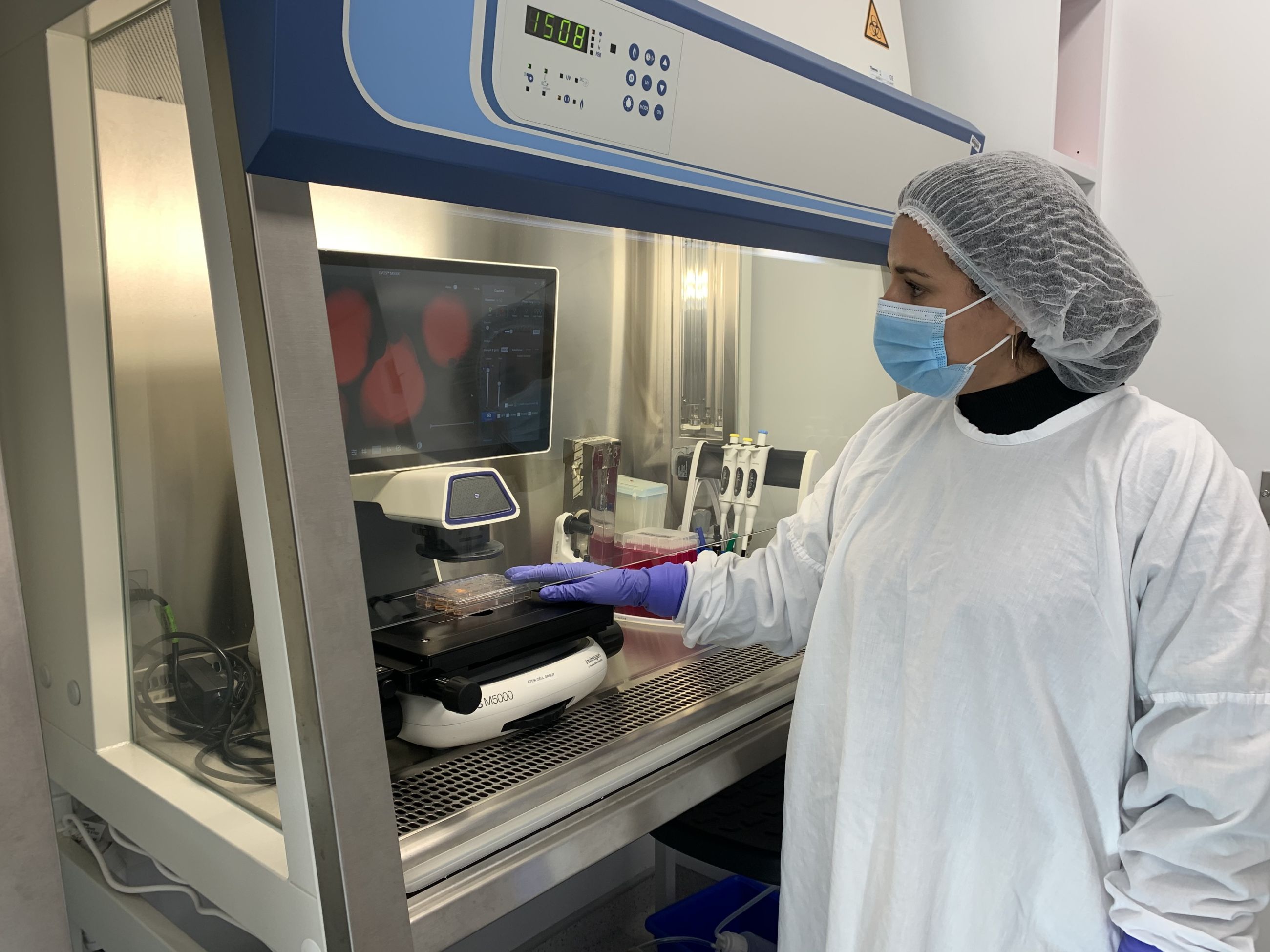
The head of Children’s Medical Research Institute (CMRI)’s Stem Cell Medicine Group, Dr Anai Gonzalez Cordero, has been awarded the 2023 Al and Val Rosenstrauss Fellowship to establish genetic therapies for two of the most common inherited retinal (eye) diseases in Australian patients.
Dr Anai Gonzalez Cordero established her research group at CMRI and also set up the Stem Cell and Organoid Facility after moving from the UK to Sydney three years ago.
The work of Dr Gonzalez Cordero and her team focuses on the production of “organoids’’. They transform small samples of skin or blood into stem cells in their laboratory, which can then be directed to turn into almost any type of cell found in body. Dr Gonzalez Cordero has developed the specialist expertise to generate organoids which function like numerous tissues and organs, including neural (nerve), retinal, or cardiac cells, enabling scientists to study the causes of human diseases that impact the brain, eyes, or heart. Organoids also speed up the development and testing of new therapies.

Dr Gonzalez Cordero said this Fellowship will support her studies on genetic eye conditions, specifically Usher Syndrome Type 2A and Stargardt Disease.“
“Usher Syndrome Type 2A and Stargardt’s are the two most common inherited retinal diseases in Australia. We want to establish a database of patients’ mutations for these two conditions and analyse the most common genetic error - so that we can start designing gene editing technologies to help these patients,” Dr Gonzalez Cordero said.
“By mapping their genetic errors, we can categorise possible treatments covering the majority of these patients”.
“We want to know – what are the features of the genetic error? This will allow us to develop therapies for these conditions.’’
The second part of the research will be modelling these conditions using organoids.
“We are in an era where the technology to treat conditions is so advanced but to help the patients, we really need to know more about what is causing the disease and the progressive degeneration leading to blindness.
“Knowledge is power.’’
Dr Gonzalez Cordero said she was very grateful to The Rebecca L. Cooper Medical Research Foundation for their belief in her work and its importance.
“They are such great supporters of science and so encouraging for research. They are really at the forefront of understanding what we do and why it is important.''
The Rebecca L. Cooper Medical Research Foundation is a philanthropic organisation established to fund research. Their goal is to improve understanding, prevention, and management of disease. It works across many medical fields including vision sciences, lung disease and neurology.