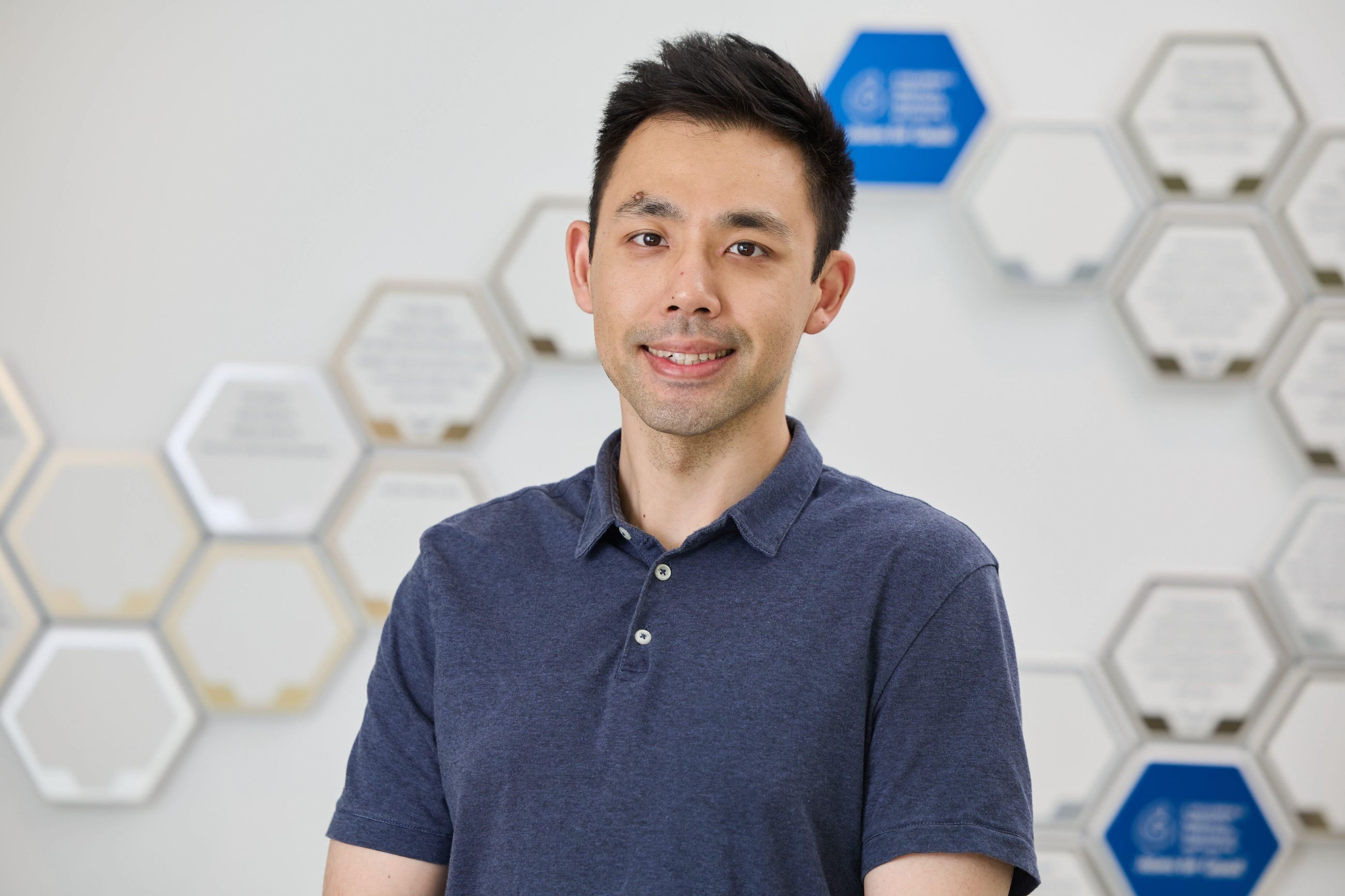
A data scientist at Children’s Medical Research Institute (CMRI) has been awarded a Cancer Institute NSW Fellowship for work he hopes will transform the way cancer is diagnosed.
Dr Zhaoxiang (Simon) Cai, Senior Data Scientist in the Proteome of Cancer (ProCan®) team at CMRI was awarded a highly competitive CINSW Early Career Fellowship.
ProCan is pioneering the use of cancer proteomics (study of the proteins in cancer cells) to personalise cancer diagnosis and treatment. The program aims to match individual cancer patients to the best treatment plan for their cancer by predicting treatment outcomes based on analyses of the proteins in their cancers. By studying the proteins in cancer tissue, which are key indicators of cell behaviour and drug response, ProCan has built the world’s largest single-platform cancer proteomic database, covering most cancer types in both adults and children.
Building on ProCan's world-leading dataset, Simon's research will utilise artificial intelligence (AI) to help transform cancer diagnosis and treatment decisions.
“This research will develop a generative foundation model, a type of advanced AI that learns patterns from large-scale protein data to improve cancer diagnosis, guide treatment decisions, and predict disease progression,’’ Simon said.
The project will also use a privacy-preserving computational method. This will enable hospitals and research centres to collaborate with ProCan without sharing sensitive patient data through federated learning, where the AI model travels between institutions rather than requiring centralised patient information.
Simon thanked the NSW Government and the Cancer Institute NSW for their support.
“This grant will allow me to complete life-changing research that will lead to more accurate diagnoses, personalised treatments, and improved outcomes, especially for patients with rare cancers or from underrepresented communities,’’ he said.
“Ultimately it aims to enhance survival rates and quality of life for cancer patients across Australia and beyond.’’