Four projects at Children’s Medical Research Institute (CMRI) have received funding through the latest NHMRC Ideas Grants round, supporting research aimed at improving diagnosis and treatment for patients.
CMRI researchers have been awarded four grants in the latest National Health and Medical Research Council (NHMRC) Ideas Grants round, supporting new projects in gene therapy, precision oncology and cancer biology aimed at addressing unmet clinical need.
The NHMRC Ideas Grants scheme is highly competitive, with funding available for only a small proportion of proposals nationwide. Within this context, the four CMRI projects selected will enable important new lines of research focused on improving diagnosis and treatment for children with serious and life-threatening disease.
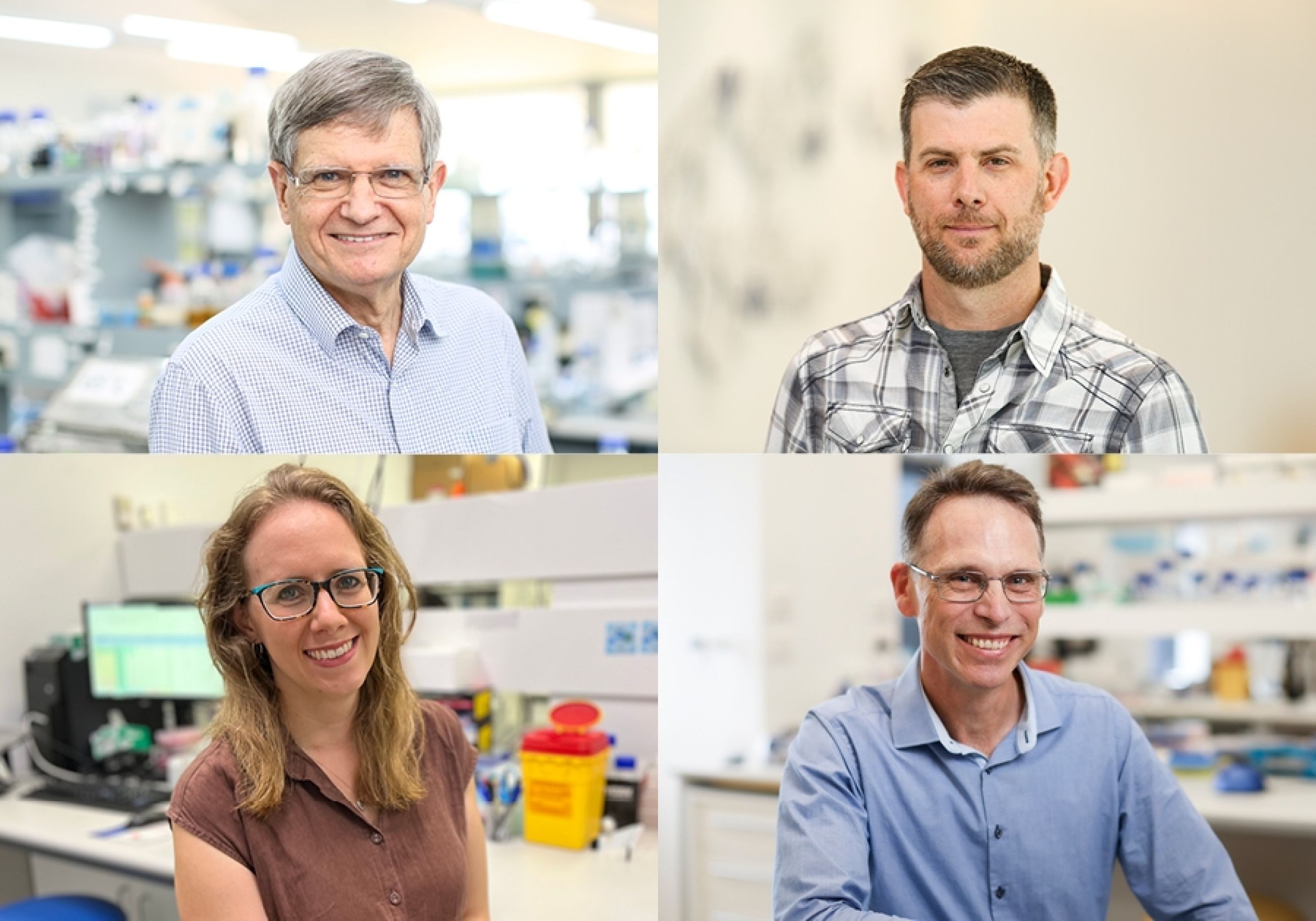
The lead investigators of the winning grants are CMRI’s Director Professor Roger Reddel AO, Professor Tony Cesare, Associate Professor Grant Logan, and Dr Rebecca Poulos.
Associate Professor Grant Logan will be advancing his research into the body’s immune response to gene therapy. Gene therapies are available for a small number of inherited diseases so far - including spinal muscular atrophy, a devasting disease affecting very young children. For these patients the results can be life-saving. But some patients miss out on gene therapy because their bodies have natural immunity (antibodies) to the gene delivery system. Associate Professor Logan’s research will investigate ways to circumvent this issue so more patients can access life-saving gene therapies.
The precision oncology grant awarded to Professor Reddel, Dr Adel Aref, other members of the ProCan® team and external collaborators in Westmead, elsewhere in Sydney and in the US, will fund development of a test to predict which cancer patients will benefit from a class of cancer drugs known as immunotherapy. These drugs have been exceptionally successful in treating patients with melanoma, even when advanced, but in other types of cancers, including childhood cancers, the results are more modest: while some patients get obtain excellent results, the treatment is ineffective for most patients. This research will investigate the ability of cancer proteomic testing procedures developed by the ProCan program combined with AI-enhanced analysis of the histopathology slides to predict which cancers will respond to immunotherapy and, just as importantly, which patients will obtain no benefit.
Dr Rebecca Poulos will work with local and international collaborators to design and evaluate personalised proteomic reports for cancer patients to enhance precision medicine for paediatric and adult cancer patients. The project will involve paediatric neuroblastoma and will be extended to adult cancers including metastatic breast cancer, and advanced upper gastrointestinal cancer, to improve treatment outcomes.
Professor Tony Cesare was awarded a grant that builds on his team’s recent discovery of an unexpected way that DNA repair pathways control cell proliferation and cell death. This research, which involves a collaboration with Westmead Hospital radiation oncologist, Dr Harriet Gee, will investigate how these repair pathways could impact frontline radiation and chemotherapy treatment for cancer patients.
Most importantly, these grant successes represent new hope for children and their families. Through innovative ideas and empowering talented researchers, CMRI is driving advances that bring us closer to better diagnostic tools and more effective treatments and therefore better health outcomes for some of our sickest children (and adults) with serious and debilitating health conditions.