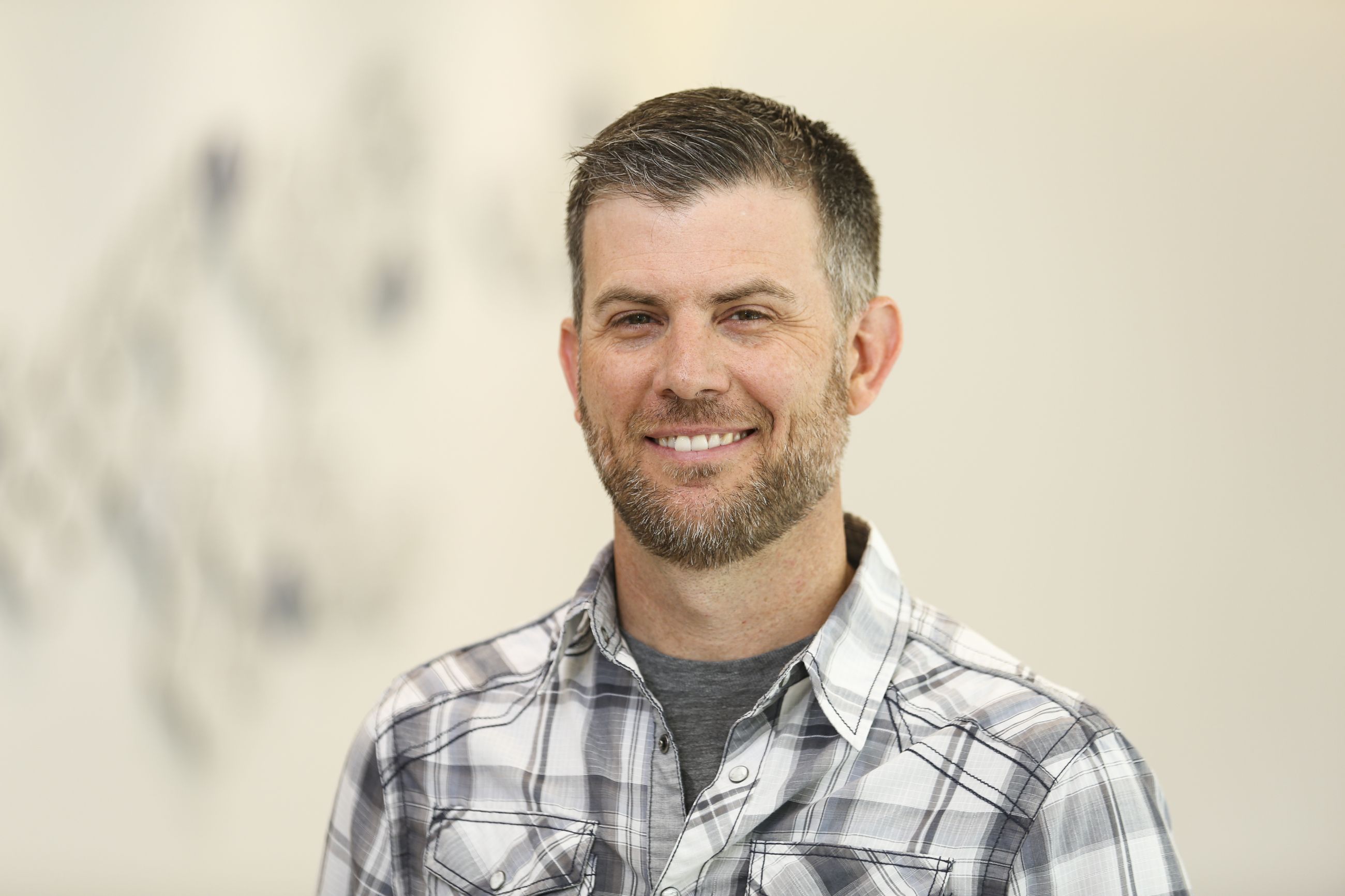
CMRI's Associate Professor Tony Cesare has received a prestigious Australian Research Council (ARC) Future Fellowship to discover key processes in DNA replication. The multi-year fellowship will fund A/Prof Cesare’s research costs, including the support of a PhD student, for four years. By exploring DNA replication, he aims to better understand the fundamental biological processes that protect human genomes.
“I am delighted to receive a Future Fellowship from the Australian Research Council. With this funding, my lab will establish a new and exciting research stream that uses our expertise in telomeres (the protective caps at chromosome ends) to study how mechanical forces within human nuclei promote effective DNA copying.”
With this fellowship, A/Prof Cesare will conduct basic scientific research on the genome, looking at DNA replication and the errors that occur during it, and how cells cope with these errors in a process called the “replication stress response”. This fellowship explores a newly discovered pathway in the replication stress response, where changes to the architecture of a cell nucleus, and movement of the genomic material inside (called “chromatin”), promotes repair of genomic damage occurring during replication.
“In the past two years, our lab discovered that regions of our genomes are moved by physical forces originating within the nucleus to promote their repair when DNA copying is threatened. This is a fundamental mechanism that has wide-ranging implications on broad aspects of cell function, and very little is known about it at present.”
A/Prof Cesare’s research will involve a multidisciplinary approach that utilises the latest cutting-edge methods of gene-editing, cell culture maintenance, and super-resolution image analysis. With international collaborators in the USA, United Kingdom, and Japan, discoveries made during this fellowship are expected to have significant impact on molecular biology in multiple continents.
“Through support from the ARC, our lab will endeavour to determine how these processes occur and their importance to these functions in living cells.”
See the full list of award recipients here.